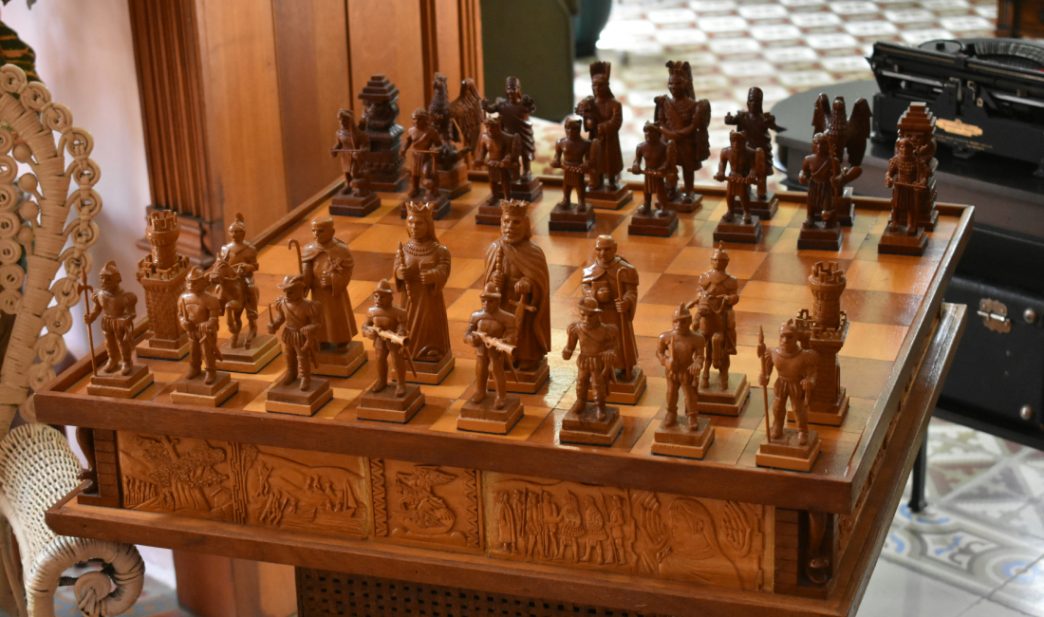
Chess is an intellectual game with a centuries-old history. It develops logical thinking, teaches critical thinking and analysis, and improves concentration. Today millions of people all over the world are fond of chess and participate in international tournaments. Despite the popularity of the game, the history of a chess game, as well as the exact origin, is a subject of debate.
“The game of chess is a lake in which a mosquito can bathe and an elephant can drown”
Indian proverb
History of a chess game: popular versions
Chess is an incredibly fascinating game. The static nature of the game is fully compensated by the sporting rivalry and training of cognitive abilities. It is not surprising that interest in the game has persisted for centuries. 
There are many versions of its origins. It is believed that the first prototypes of chess, associated with the movement of chips on the board, existed in the territories of modern India, Iraq and Egypt as early as 2-3 thousand BC. However, it was not possible to prove the exact relationship.
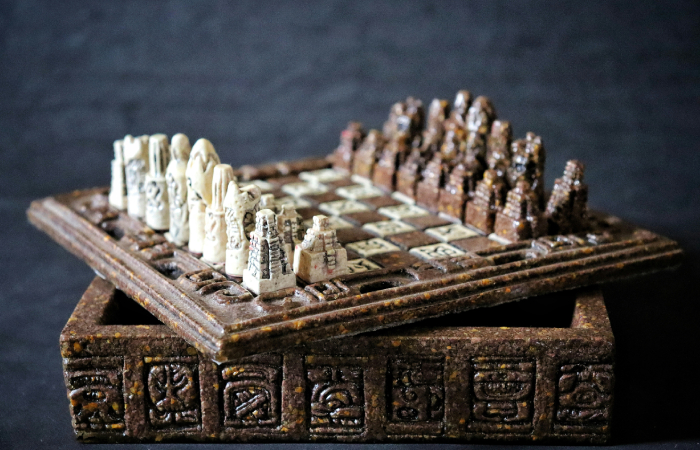
According to another theory, the history of chess dates back to 1000 B.C., when an Indian mathematician demonstrated by “passing” over the squares the raising of a number (using grain as an example) to a degree. Such a board with squares later became a playing board.
The most popular version of the emergence of chess is a transformation of the Indian game Chaturanga, which emerged in the V-VI century AD. This theory is supported by references to a chess game found in a Persian poem dated 570 AD.
The name “chaturanga” translates as “four-armed”, and it originally described the composition of the army of ancient India:
- chariots (ratha),
- war elephants (hasti),
- cavalry (ashwa),
- foot soldiers (padati).
The game symbolized a battle involving four different types of troops, under the command of a leader (raja).
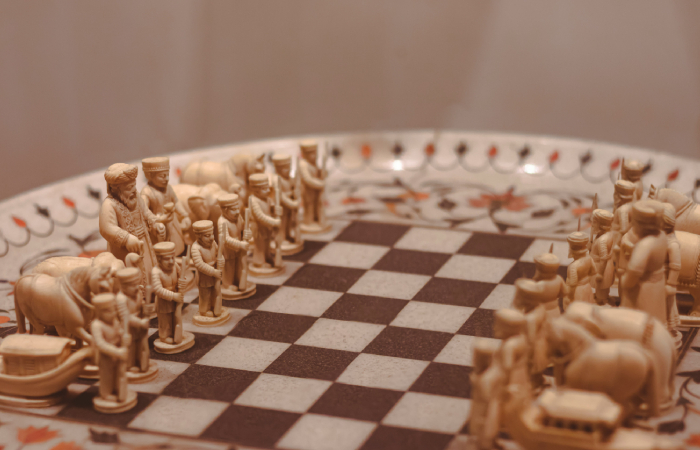
The moves of rooks, king, pawns and knights were similar to the modern ones, but there was no queen yet, and bishops moved differently – they moved only one third of the board diagonally and had the ability to jump pieces, just like knights.
Development of the rules and types of chess
Over the centuries, the rules of chess and the design of the pieces have been improved and the game itself has been modified. Instead of four players, two were sufficient for a game, and moves were determined without dice. Chaturanga spread to other parts of the world.
In the VII century, Arab conquerors introduced chess to the Arab world, where it became known as “shatranj”. The Arabs made significant changes to the rules and design of the chess pieces, which led to the game becoming more similar to modern chess.
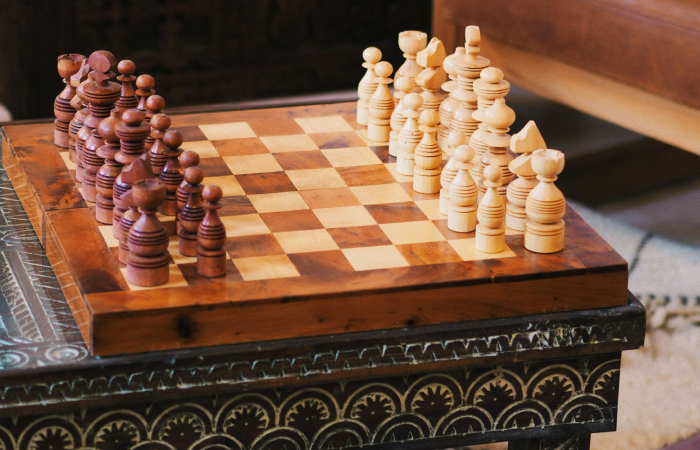
Medieval Europe also witnessed the spread of chess. The game became popular among the aristocracy and was even used to teach tactics and strategy in military armies.
The rules of chess were mixed with the rules of local national games, adjusted to suit the particular region’s ideas about strategic games.
The following games can be identified in the Chess group:
- Chaturanga;
- shatranj;
- circular chess;
- Courier Chess;
- Maharaja and Sipai;
- Chinese chess (xiangqi);
- Japanese chess (shogi);
- jungle game;
- chandraki (Tibetan variant).
Until the middle of the XVIII century, the development of chess theory in Europe was slow. However, in 1749, the French chess master François-André Philidor published a book entitled Analysis of the Game of Chess. It contained several revolutionary opening concepts, including the defense that later received his name, a plan for defense in the rook ending without pawns. This book also formulated Philidor’s famous statement, “the pawn is the soul of chess”.
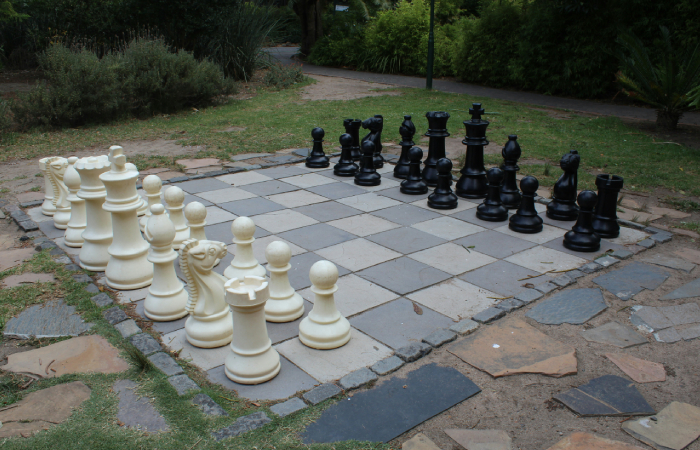
A turning point in the history of chess occurred in the 19th century, when the modern rules of the game were formulated in England. Among the changes were the introduction of the castling rule, modified pawn moves, and many other rules that we consider standard for chess today.
Modern chess and computers
With the development of technology in the 20th century, chess became the subject of attention of artificial intelligence researchers and developers. In 1997, the Deep Blue computer developed by IBM defeated the world champion Garry Kasparov. This event emphasized the potential of artificial intelligence in the field of chess and sparked interest in computer chess.
Today, chess remains one of the most popular intellectual games in the world. With the advent of online platforms for playing and learning chess, and thanks to the broadcasting of world championships, chess has become accessible and interesting to millions of people around the world.