Playing Black is more challenging than playing White. Your opponent moves first, sets the pace, and chooses the opening system. Black’s task is to neutralize White’s initiative, equalize the position, and then fight on equal terms. The most popular openings for Black provide a solid, weakness-free setup while still offering chances for active counterplay.
The choice of opening for Black depends entirely on White’s first move. Against 1.e4 you need one set of defenses; against 1.d4, another. There are virtually no universal openings that work against everything. That is why serious players usually prepare several systems to meet different first moves.
Defenses Against 1.e4
When White begins with 1.e4, they aim for active play and open positions. Black can respond symmetrically with 1…e5 and enter open games, or choose asymmetrical defenses that lead to entirely different types of positions. 
The Two Knights Defense
After 1.e4 e5 2.Nf3 Nc6 3.Bc4, Black can play 3…Nf6, attacking the pawn on e4 while developing a piece. This is known as the Two Knights Defense – one of the most natural ways to meet the Italian Game. Black develops quickly and is ready to fight for the center on equal footing.

White often sharpens the play with 4.Ng5, targeting the weak f7-square. The resulting positions can become highly tactical, with sacrifices and complications. The Two Knights Defense requires accurate knowledge of several critical lines, but for players comfortable with tactical battles, it offers strong winning chances.
The Berlin Defense
The Berlin Defense (1.e4 e5 2.Nf3 Nc6 3.Bb5 Nf6) experienced a revival thanks to Vladimir Kramnik. In 2000, he used it in his World Championship match against Garry Kasparov and achieved a sensational victory. Kasparov was unable to break Kramnik’s solid defense and lost his world title.
The core idea of the Berlin Defense is simple: after 4.0-0 Nxe4 5.d4 Nd6 6.Bxc6 dxc6 7.dxe5 Nf5 8.Qxd8+ Kxd8, Black agrees to a queen exchange and enters an endgame with the king in the center. Although the position may appear uncomfortable, in practice it is extremely difficult for White to exploit. Black gains the bishop pair and active piece play, while any slight lag in development is compensated by a solid pawn structure.
The Berlin Defense became a nightmare for aggressive White players. Many top grandmasters even moved away from the Ruy Lopez after Kramnik demonstrated the system’s resilience. Today, it remains one of the main weapons at the highest level.
The Sicilian Defense
The Sicilian Defense is the most popular – and arguably the most complex – defense against 1.e4. Instead of mirroring White’s move, Black attacks the center from the flank. This asymmetrical approach leads to sharp and dynamic play. White usually gains central space and kingside prospects, while Black seeks counterplay on the queenside.
The Sicilian has countless variations – the Dragon, Najdorf, Sveshnikov, Taimanov – each with its own strategic logic and typical plans. It is a universal weapon for ambitious players who do not want to settle for a draw with Black.

Great attacking champions such as Garry Kasparov and Bobby Fischer frequently employed the Sicilian. In his classic chess book My 60 Memorable Games, Fischer demonstrated how Black can play for a win from the very first moves.
The only real drawback of the Sicilian Defense is its complexity. It demands significant theoretical knowledge, a deep understanding of pawn structures, and strong defensive skills. For beginners it may be overwhelming, but for intermediate and advanced players it offers tremendous practical chances.
The French Defense
The French Defense is almost the opposite of the Sicilian. Black builds a solid pawn structure, prepares for a long positional struggle, and avoids early tactical chaos. The main idea is straightforward: challenge the center with …d5, develop pieces behind the pawn chain, and later seek counterplay.
The French Defense is widely regarded as very reliable, though somewhat passive. Black often struggles with the light-squared bishop on c8, which can be restricted by its own pawns for a long time.
The Scandinavian Defense
The Scandinavian Defense is the most direct response to 1.e4. Black immediately strikes at the center and invites open play. After 2.exd5 Qxd5 3.Nc3, the black queen comes out early and becomes a target, but in return Black achieves quick development and active piece play.
The Scandinavian’s main advantage is simplicity. There is less heavy theory, positions are clear, and plans are straightforward. For practical play – especially in rapid or blitz – it is an excellent choice. White players often underestimate Black’s activity and run into trouble.
Defenses Against 1.d4
Openings beginning with 1.d4 usually lead to more closed positions and demand strategic understanding. Among the most popular openings for Black against 1.d4 are classical defenses with a pawn on d5, as well as modern systems where the center is controlled by pieces rather than immediately occupied by pawns.
The Slav Defense
The Slav Defense is one of the most reliable responses to the Queen’s Gambit. Black supports the pawn on d5 and avoids structural weaknesses. The bishop on c8 remains free and can develop to f5 or g4 before the pawn on e7 advances.

The Slav does not promise immediate equality, but it guarantees a solid and resilient position. Vladimir Kramnik relied on the Slav Defense throughout his career, and no convincing refutation has ever been found.
The Nimzo-Indian Defense
The Nimzo-Indian Defense was a revolutionary concept introduced by Aron Nimzowitsch in the 1920s. Instead of occupying the center with pawns, Black controls it with pieces. The bishop on b4 pins the knight on c3 and may exchange for it, damaging White’s pawn structure.
The Nimzo-Indian requires an understanding of dynamic factors: piece activity, initiative, and weak squares. Black often concedes the center temporarily but gains active play and counterchances on the flanks. This is modern chess, where static material evaluation gives way to dynamic balance.
The Grünfeld Defense
The Grunfeld Defense is an even more radical system. Black allows White to build a powerful pawn center and then attacks it energetically. It is a risky strategy that demands precision, but in the hands of a strong player it becomes a formidable weapon.
Both Garry Kasparov and Bobby Fischer considered the Grünfeld one of the best defenses against 1.d4. Fischer once remarked that without it, he would not know how to play for a win as Black against a strong opponent. It is an opening for ambitious players who seek victory from the very beginning.
The King’s Indian Defense
The King’s Indian Defense is a classic of hypermodern chess. Black fianchettos the bishop on g7, castles kingside, and prepares for a long maneuvering battle. White typically builds a strong pawn center, while Black attacks it from the flanks.
The King’s Indian has produced countless attacking masterpieces. Mikhail Tal, known as the “Magician from Riga,” created brilliant sacrificial attacks in this opening. Garry Kasparov also favored it for its dynamism and tactical potential.
Its hallmark is mutual attack: White advances on the queenside, while Black launches a kingside assault. The resulting games are sharp and double-edged, where success depends on who reaches the opposing king first.
How to Choose an Opening for Black
Choosing a chess opening begins with understanding your preferred types of positions. Players who enjoy open tactical battles may favor the Sicilian Defense against 1.e4 and the Grünfeld Defense against 1.d4. Those who prefer strategic maneuvering should consider the French Defense and the Slav Defense.
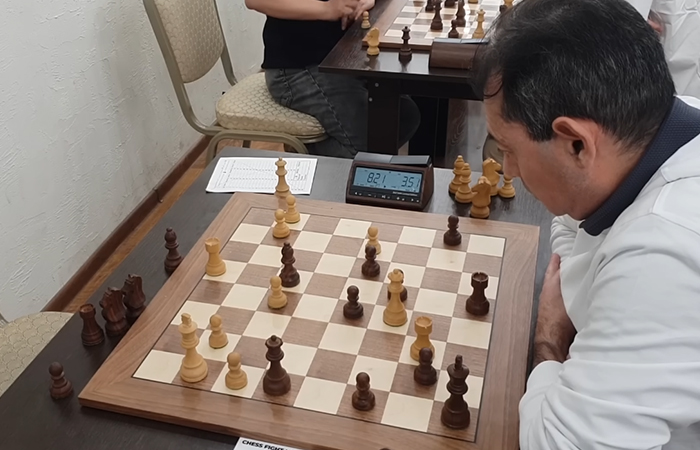
Attempting to master every opening at once rarely leads to success. It is far more effective to select one or two reliable systems against each of White’s main first moves and play them consistently. Over time, experience accumulates in typical structures, standard plans become second nature, and the opening phase no longer feels intimidating.
Black’s objective is not necessarily to gain an advantage straight out of the opening. Equalizing the position and reaching the middlegame or endgame with harmonious development and a safe king is often sufficient. From there, everything depends on positional understanding and tactical skill.