The history of a chess game goes back to the distant past. Exact dates and names today can not be called, but what most experts agree on is that chess is an evolved version of the game Chaturanga. Modern chess is very different from the “source”. It is not only about the number of players in the game and the rules, but also about the main actors of any chess game – the pieces. Instead of chariot, cavalry, bishops and infantry of Chaturanga, chess uses king, queen, rook, bishop and pawns. In this article, we’ll explore how chess pieces look and move.
Unusual chess pieces
Today, a player has 16 pieces at his disposal – one king, one queen, two rooks, two bishops, two knights, and eight pawns each. Before the rules were settled, there were many specific pieces on the chessboard: centaurs, horsemen, dragons, and others.
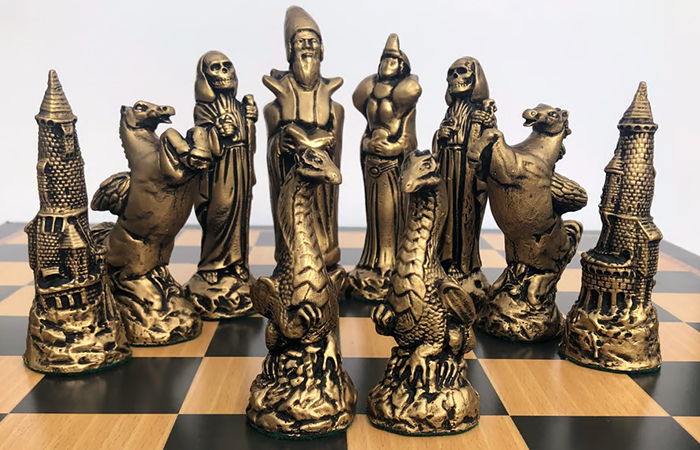
Some of these included: 
- Centaurs – figures combining a human top and the body of a horse underneath. They could move like horses, moving around the board in an “L” shape like a modern horse.
- Instead of regular horses, some variants of chess had riders, which were more difficult to use as their movements were less intuitive.
- Dragons: pieces representing dragons could have special abilities, such as moving a greater distance diagonally or vertically.
- Rocking horses had unusual movement abilities, for example they could move a few squares forward and then one square sideways, making their movement unique.
- The royal elephant moved like a queen (in modern chess), and like an elephant.
Each country from East to West where chess became popular added pieces of mythical creatures specific to its culture or era. Over time and through standardization, modern chess has taken its classical form with a fixed set of pieces and the rules we know today.
Which chess pieces are used in tournaments
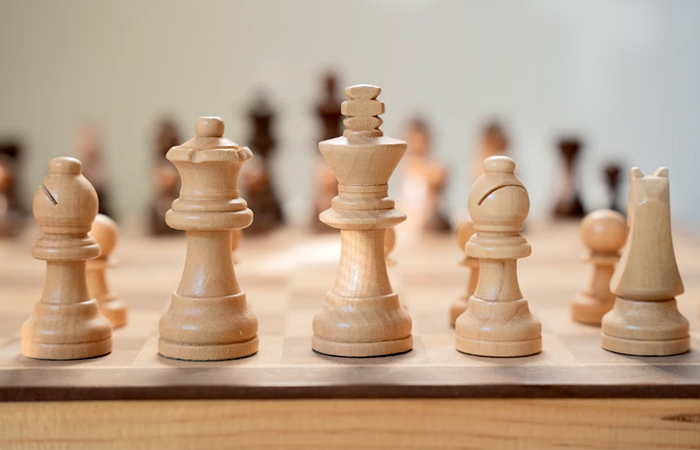
The chess set, which is considered the benchmark, was named “Staunton Chess” in honor of the famous Shakespearean scholar and chess champion Howard Staunton (1810-1874). The name “Staunton” came into use through the efforts of Nathaniel Cooke, who designed these chess pieces and officially registered them on March 1, 1849. At his suggestion, Howard Staunton agreed to put his name to the document, and this may be one of the first instances in history where the name of a famous person was used to successfully commercialize and sell a product.
Meaning of pieces and their value
In the course of battles, it is sometimes necessary to sacrifice certain pieces in order to successfully accomplish the tasks at hand. Each piece on the chessboard has a certain value, and the players need to take this into consideration when making strategic decisions:
- King is an invaluable figure, as without him the game can not continue.
- Queen has the highest value, is able to perform functions comparable to the work of 9 pawns.
- Knights and bishops are valued at 3 pawns each.
- Pawns are considered soldiers and perform minor but important tasks.
Names and features of chess pieces
King
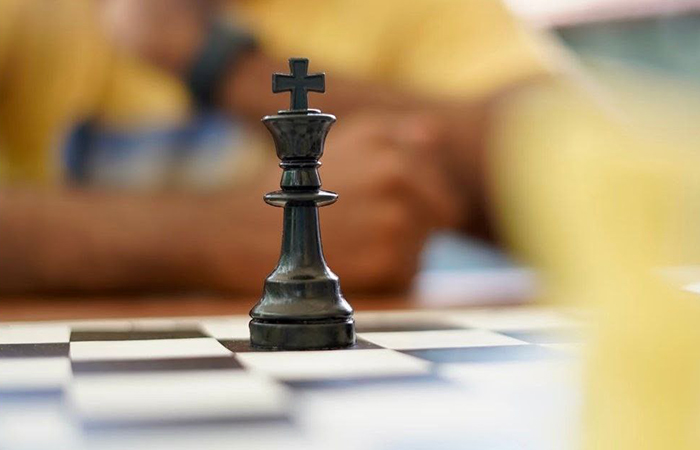
This is the fundamental piece on the chessboard, its movement is limited to one square, but it has the special advantage of being able to castel. If the king ends up in the mate, it means the end of the game, as the chess game is over. It is considered to be the most important but also the most vulnerable piece on the board, because when put under check (threat of attack) the king has no other moves. The king can also participate in castling with the rook and move to neighboring squares in any direction.
Queen
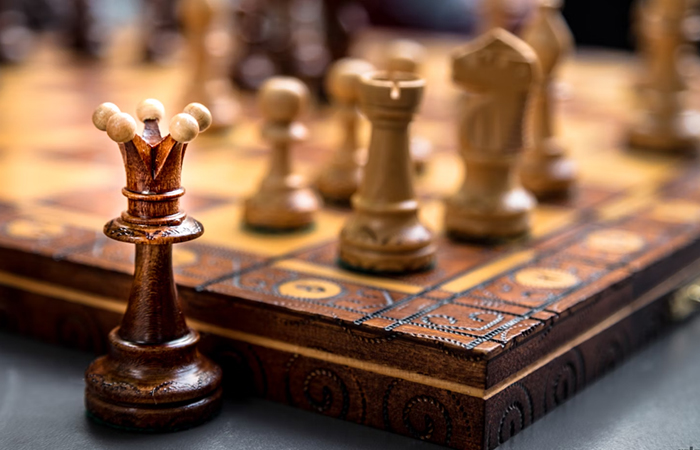
The most versatile and valuable piece after the king. The queen is used to support other pieces and to make forced attacks. Its moves combine the moves of the bishop and rook, making it the most powerful chess piece. At the beginning of the game, the white queen occupies the d1 square and the black queen occupies the d8 square. The queen always starts the game from a square of his color and moves any number of squares up, down, left, right and diagonally.
Interesting fact: why Queen is called this way
Wars were a frequent event in 15th century Europe. One of those who waged them was Spain’s Queen Isabella I of Castile. The legends of the liberation of Spain describe the Queen’s daring march from Jaén to Basu, a distance of 90 miles. This prompted local chess players to associate the queen with a piece on the chessboard, and to change the rules.
Rook
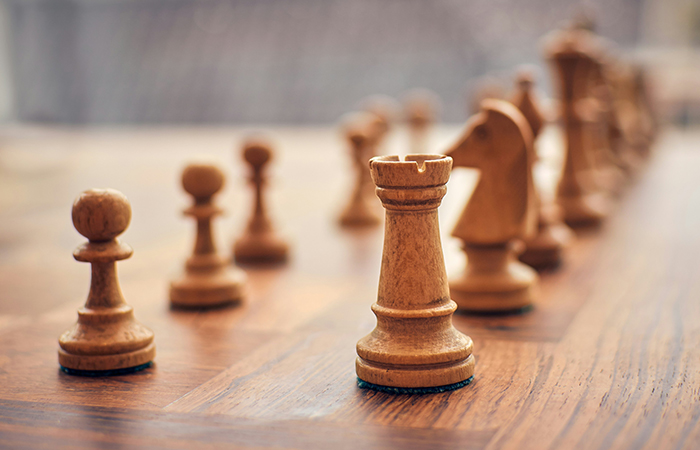
It visually resembles the tower of a castle. It moves horizontally and vertically as many squares as possible. The rook is considered a heavy piece, its strength is equal to about the strength of five pawns, and two rooks together are equivalent to a queen. At the beginning of the game, white rooks occupy the corner squares, a1 and h1, and black rooks occupy a8 and h8. The rook can attack or move to any number of squares horizontally or vertically, provided that there are no obstacles in its path. A special feature of the rook is its participation in castling with the king.
Bishop
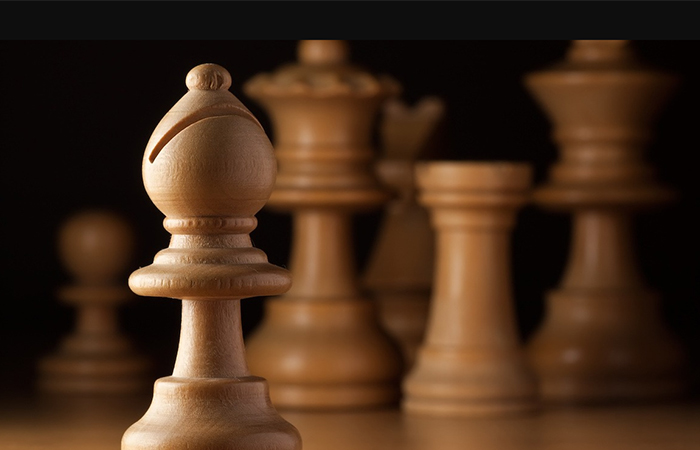
The shape resembles a monk in a robe, hence the name. It is believed that the emergence of this piece was facilitated by the passion for the game of chess among Catholic priests. At the beginning of the game white bishops occupy the squares – c1 and f1, black bishops – c8 and f8. It moves either only on the white squares or only on the black squares. The bishop moves diagonally to any number of squares, provided that there are no other pieces in its path.
Knight
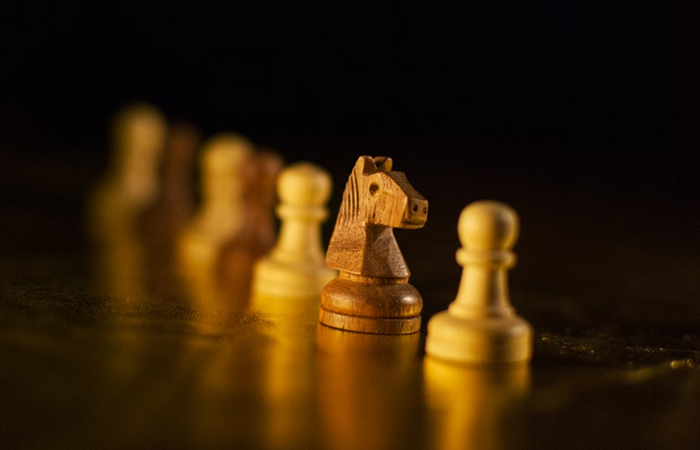
It is ideal for spontaneous attacks because of its unusual movement pattern. This chess piece is located next to rooks – white knights on b1 and g1, black knights on b8 and g8. The Knight moves in an “L”-shaped pattern, and its unique ability is that it can jump over other pieces on the board.
Pawn
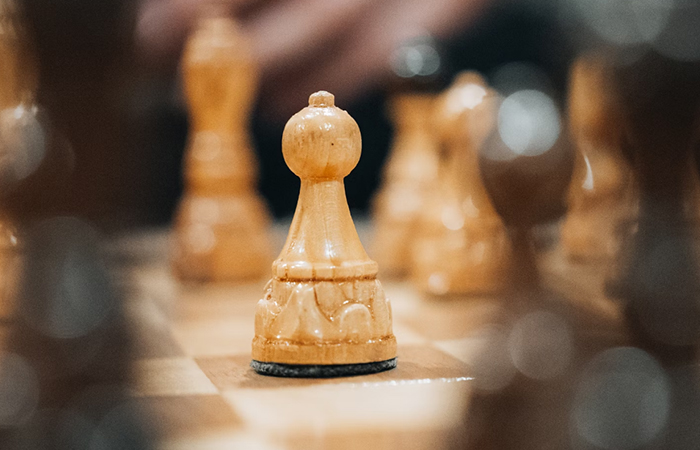
An important unit in a chess game that allows you to set traps for your opponent. The pawn is not considered a figure, and its weight is the smallest in the game, but without it a chess game is impossible. A pawn sacrifices itself to capture a more valuable piece, in the hands of an experienced player a pawn can checkmate a king. It moves vertically 1 square (2 squares at the beginning of the game). The pawn captures diagonally, moving one square at a time. Its unique feature is that when it reaches the farthest rank, it can be promoted to any other piece.
What materials are chess pieces made from
The material for chess pieces varied from animal bones to precious metals. The choice depends on the preference of manufacturers and collectors. The most common materials for chess pieces are the following:
- Wood. Wooden chess pieces are among the most popular. They can be made from different types of wood such as maple, beech, walnut and oak. Wooden pieces can be handcrafted and decorated with carvings or inlays.
- Metal. Chess pieces made of metal such as brass, bronze or aluminum can be heavy and have beautiful finishes. These sets can be designed with high quality materials, expensive finishes and details, making them appealing to luxury and art connoisseurs.
- Plastic. Plastic figures are the most affordable and widely available. They are lightweight, durable and can be made in different styles and color variations.
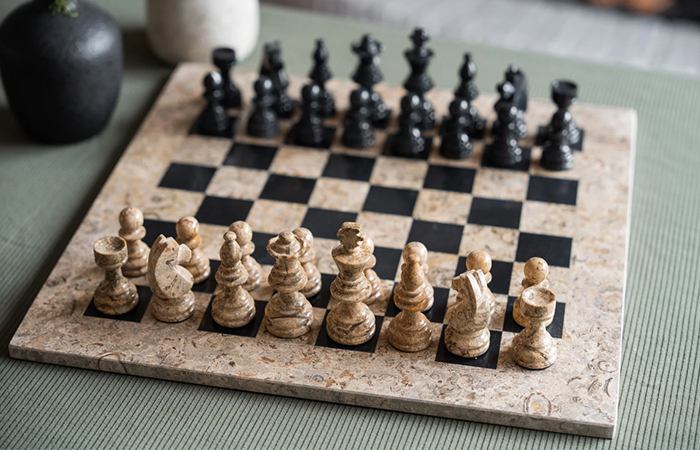
- Marble and stone. Some chess sets include pieces made of natural marble, granite, or other types of stone. These materials give the set a special weight and elegance.
- Ceramics and Porcelain. The figures may be fragile, but they have a unique artistic style and are often collector’s items.
- Glass. Glass chess pieces can have transparent or colored elements, making them highly decorative.
- Ivory and bakelite: In the past, some figures were made of ivory and bakelite. However, the use of ivory today is subject to strict restrictions due to wildlife conservation efforts.
The transformation process of the game of chess has touched every element of it. The game of chess develops logic and memory, but in some cases can help not only to develop cognitive abilities, but also to enrich an antique collection.