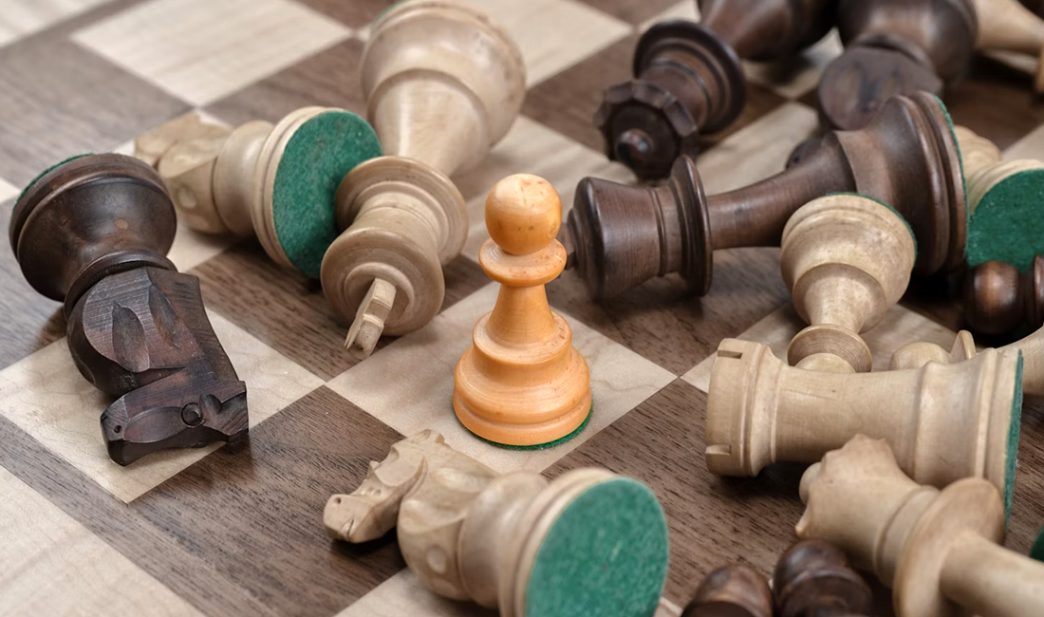
The pawn is the least powerful piece in chess, but it plays an important role in the strategy and tactics of the game. A pawn move in chess can be made forward vertically one square per move, except for the first move when a pawn can advance two squares forward. This is not all the possibilities of the pawn. We’ll explore in this article how the pawn moves and what are the features of the figure.
How does a pawn move: backwards or forwards?
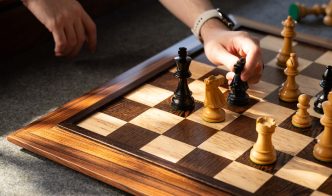
When a chess game begins, a player has eight pawns. On the chessboard, the pawns are located on the second and seventh horizontals for each side. On the chess board, pawns are positioned on the second and seventh ranks for each side. At the beginning, players have eight pawns in front of the other pieces. This creates a defensive line for their more valuable pieces and allows them to build an attack against the opponent.
Popular pawn moves: 
- A one-square move. Most commonly used to advance pawns forward.
- A two-square move. This pawn move can be used for rapid pawn development in the opening of the game.
- En passant capture. If the opponent’s pawn made a two-square move and was next to your pawn on the adjacent file, you can capture it “En passant” (on the pass). To do this, you need to move your pawn to the square that the opponent’s pawn passed over, as if it had made a regular one-square move.
- Pawn promotion. When a piece reaches the opposite edge of the board, it can become any other piece (except the king). This process is called pawn pawn promotion and gives the player the opportunity to strengthen his position on the board by choosing a more powerful piece.
Despite the small weight in the game, it is the initial pawn formations that determine further strategies:
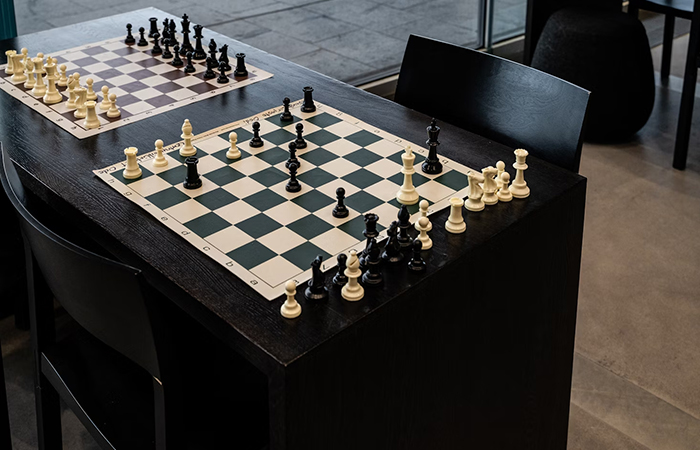
- 1.е2-е4, с7-с5 — Sicilian Defense;
- 1.е2-е4, е7-е5 — a whole family of openings known as Open Games;
- 1.d2-d4, f7-f5 — the Dutch Defense;
- 1.c2-c4, c7-c5 — the English Opening.
Tips for beginner chess players: how to use a pawn
- Create pawn chains. The strength of the structure is that pawns protect each other. If the opponent beats the pawn on e5, a pawn move to d4 will beat the opponent’s piece. Similarly with pawns on d4 and c3. On the other hand, the pawn on b2 needs protection.
- Avoid “doubled” pawns (positioning of pieces on the same file). Especially “isolated” ones. Often beginner chess players lose pawns on this mistake.
- Occupy the center of the board with pawns. Pawns in the center create space for other pieces.
- Do not move pawns away from the king at the beginning or middle of the game. Pawns are excellent defenders for the king. Moving pawns away from the king weakens his position and gives the opponent an opportunity to attack your monarch.
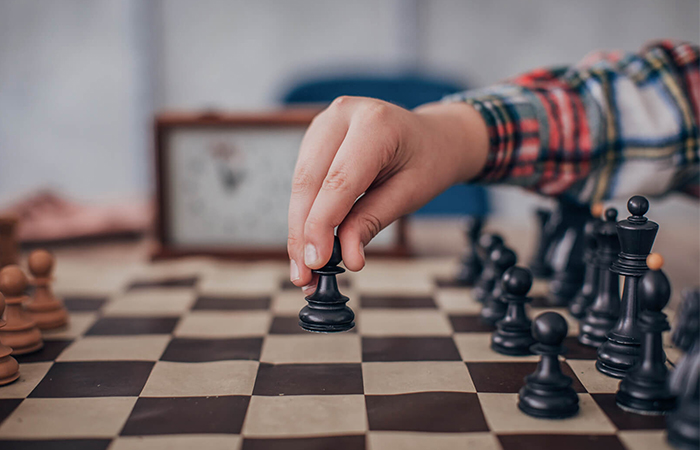
Any chess piece is used according to strict rules (how many pieces, specifics of the move) and it is absolutely necessary to know them. This not only adds confidence to the player, but also opens up opportunities for creating an effective strategy. With skillful handling, pawns can move in chains, crowding the enemy forces. Their importance in this case increases manifold. No wonder the great French chess player of the XVIII century Francois Philidor once said: “The pawn is the soul of chess”.