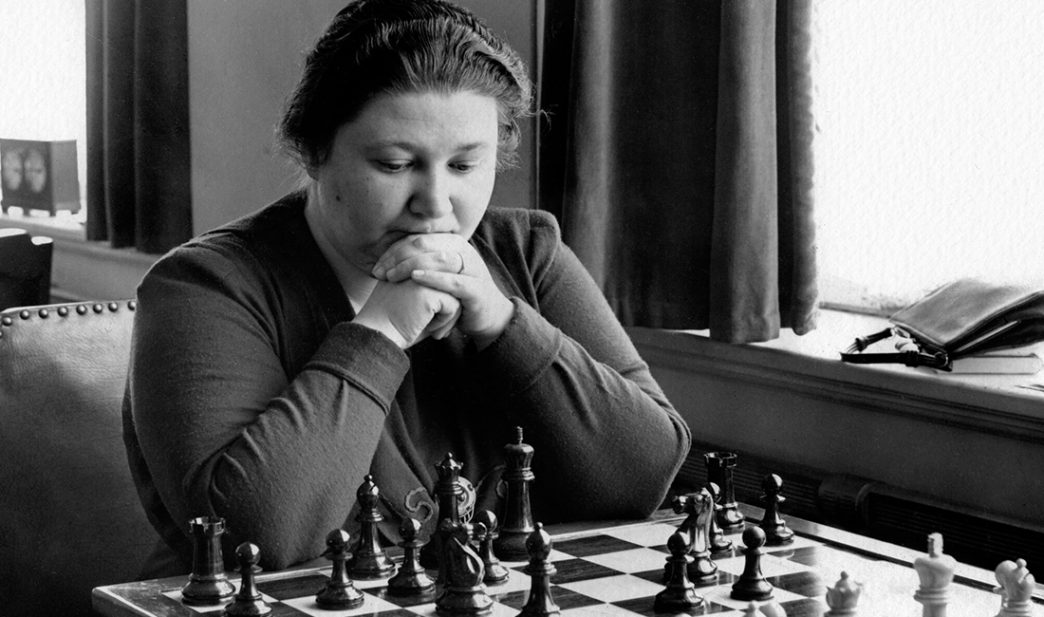
From July 18 to 30, 1927, the first international chess tournament among women was held in London. Twelve athletes from 7 countries participated, but only one won: the first female chess champion, Vera Menchik, with 10 wins out of 11 games. Her name even today is a symbol of achievement in the world of chess, a symbol of perseverance and confidence, but the path to the top of the championship was not cloudless.
“Vera was always head and shoulders above all her opponents and played like a good male master”
Salo Flor, chess player
Vera Menchik’s life story
After the release of the The Queen’s Gambit series, the world became interested in the game with renewed vigor. Although the heroine of the movie is a fictional character, many fans of chess battles drew parallels with the story of one of the strongest female chess players in the world, who confidently won not only among women, but also among men. We are talking, of course, about Vera Menchik. 
Vera was born in Moscow on February 16, 1906. Vera’s father, František Menčík (Czech), worked as a manager of estates and owned a mill, while her mother, Olga Illingworth Menčík (English), was a governess. Their children received a good education. In particular, Vera studied at a private gymnasium, and was also active in painting, theater and literature.
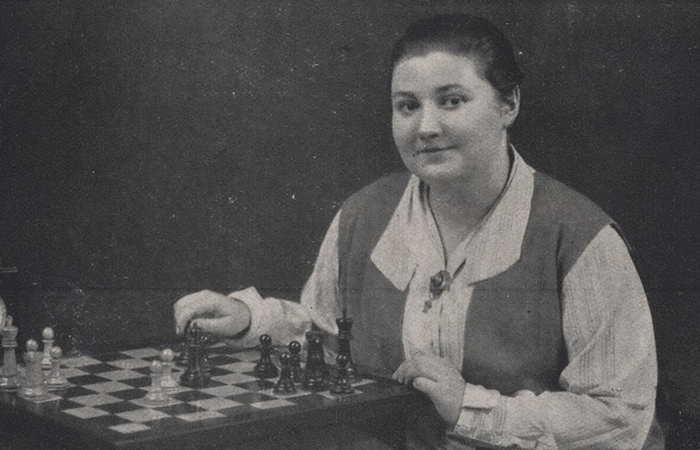
When Vera was 9 years old, her father taught her to play chess. It is worth noting that, according to the future champion herself, chess was not her main hobby.
In 1917, the October Revolution radically changed Menchik’s life. The family was left without any property. Until 1920, Vera attended school, where there was no heating and electricity. The children sat in their outer garments during classes, and oil lamps were used as lighting.
In 1921, the family decided to leave Russia, but the parents split up: her father went to Czechoslovakia, and Vera, her sister and mother went to England. The everyday difficulties were replaced by a language barrier. The girls did not speak English and risked social isolation. Chess came to the rescue, because St. Leonards, where the Menchik family moved, was famous for its chess traditions.
Vera and chess
Vera took private lessons from Hungarian Grandmaster Géza Maróczy and in 1923 became a member of the Hastings Chess Club. She also participated in one of the tournaments of the Hastings Chess Congress. Thus began the girl’s career in chess. And although she did not become the best in this tournament, her talent was recognized by her opponents. Vera herself later recalled this event as follows: “I used to play to amuse myself, then to learn, and now I play to create”.
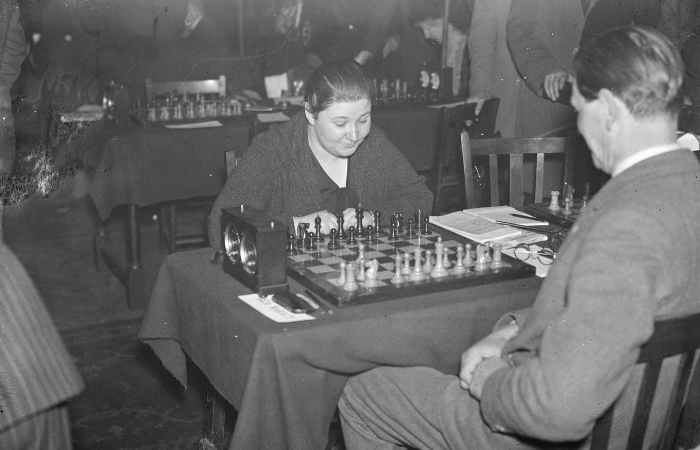
She had many tournaments in her career, one of the main ones being the first World Women’s Chess Championship in 1927. Participants from Germany, Norway, France, Czechoslovakia, Sweden and Scotland could not beat the strategy: Vera Menchik was the first female chess champion. Her prize money amounted to 20 pounds sterling (about $1000 in today’s money).
Vera Menchik Club
Probably the champion title gave her confidence in her own abilities, but anyway, after this event, Menchik decided to play not only with women, but also with men. Thus she became the first female chess player to participate in men’s tournaments. In 1929, at the age of only 23, Menchik played with the Polish grandmaster Akiba Rubinstein. The game ended in a draw.
Later, there was a tournament in Karlsbad, where the strongest players met. However, at that time, Vera was included among them with great skepticism, with many expecting her to fail quickly. Journalist Hans Kmoch promised to dance ballet if the young woman managed to score more than 3 points, while Austrian chess player Albert Becker joked before the game: “Gentlemen, I have an excellent idea. I propose we create a club named after Vera Menchik. Those who lose to her will become full members of the club”. Needless to say, Becker himself became an honorary member of the “club” after losing to Vera. There is no information about Kmoch’s dance, but it is safe to say that he quickly regretted his barbed remark.
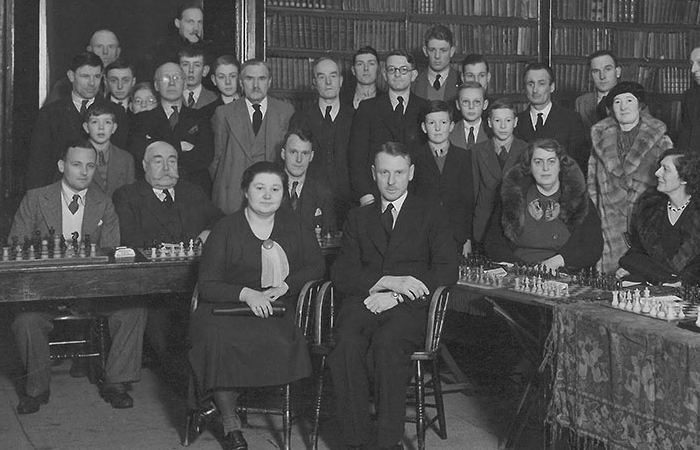
Vera showed remarkable concentration during the game and persevered until the last move. In a 1935 article on chess tactics, Menchik said: “Counterattack is the soul of the game. In difficult moments, when we find ourselves in a challenging or even hopeless position, our best means of restoring balance lies in creating difficult situations for the opponent.”
In 1937, Menchik married a chess player named Rufus Stevenson. Because of his failing health, Vera often devoted her attention to caring for her husband, which in turn affected her professional development: she was forced to refuse to participate in chess tournaments in order to remain close to him. However, despite these difficulties, Menchik still held the title of world champion among women, and from 1927 to 1939 she played 83 games against other women chess players, suffering only one defeat.
Unfortunately, Vera Menchik’s life was too short. During World War II, she worked as a translator supporting British soldiers in France. However, in 1944, during the aerial bombardment of London, Vera was killed. She was only 38 years old.Despite her short life span, Vera Menchik left an expressive mark on the history of chess. Her outstanding achievements and unyielding determination in confronting men in the chess arenas served as an inspiration to players from different countries. Her name will forever remain a symbol of struggle and talent, and her contribution to world chess culture is forever inscribed in history.