Chess has developed a rather specific reputation. In popular imagination, a chess player is someone who calculates dozens of variations in real time, like a human calculator. For beginners, chess games often look like an endless chain of calculations: “if I move here, my opponent responds like this, then I go there,” and so on until the very end of the game. All of this creates a persistent illusion: chess and mathematics are almost the same thing. If you are not good at math, it is better not to approach the chessboard. But is that really the case, and do you need to know math to play chess? The short answer is no. Math is not required for chess. The long answer is much more interesting.
Chess players and mathematics: where the myth comes from
Among beginners in chess, there is a common belief that a strong player must also be good at mathematics. This is not entirely true, but it is not a complete myth either. It has real roots: a number of outstanding chess players were indeed strong in mathematics, and over time these coincidences turned into a stable stereotype.
World Champion Mikhail Botvinnik, after his playing career, actively worked on chess algorithms and contributed to applied computing. The fifth World Champion, Max Euwe, was a professional mathematician and later worked in computer science. Examples like these create the impression that there is a direct connection between chess and mathematics. In reality, however, this is more of an overlap in interests and ways of thinking than a strict dependency.
At the same time, it would be wrong to say that there is no connection at all. The chessboard is a rich source of problems in combinatorics, geometry, and graph theory. Such problems were studied by Leonhard Euler and Carl Friedrich Gauss. Classic problems like the knight’s tour and the eight queens puzzle have long become part of mathematical culture. But this connection is mostly theoretical. In real play, things work differently.
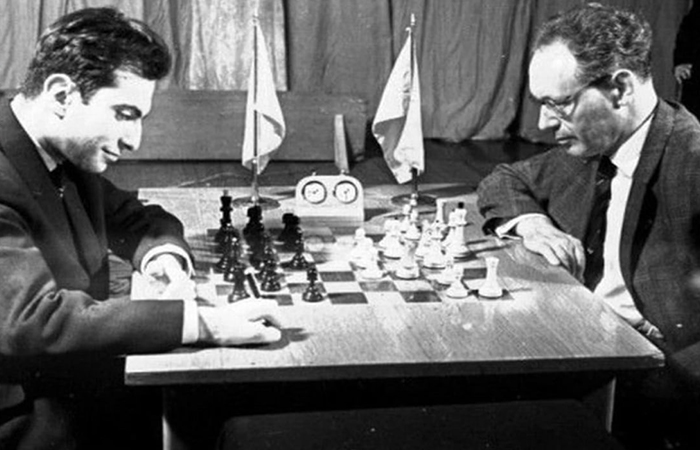
There is one historical example that illustrates this particularly well. In 1960, Mikhail Botvinnik and Mikhail Tal played a match for the World Championship title. Botvinnik was an engineer and a systematic thinker who built his play on logic and deep preparation. Tal, on the other hand, had a humanities background and approached the game in a completely different way.
Tal’s style was based on intuition and his ability to create complex, unconventional positions. He often sacrificed pieces in situations where precise calculation did not give a clear justification, and still won. His opponents simply got lost in the tension and dynamics he created over the board. In the end, it was Tal who became World Champion.
This example does not mean that logic and calculation are not important in chess. They are essential. But this match clearly shows something else: a purely mathematical approach is not enough. What matters more are the skills that develop through playing chess.
What actually matters in chess
If we put aside the myth of chess as mathematics, it becomes easier to understand what the game really relies on.
During a game, a player does not calculate dozens of variations to the very end. That is physically impossible. Even a few moves ahead, the number of possible continuations becomes too large. So players rely on something else – experience.
Over time, players build up a mental library of typical positions, familiar ideas, and tactical patterns. At the right moment, these patterns are simply recognized. A player does not see a random set of pieces, but a familiar structure and an understanding of what usually works in that kind of position.
That is why strong players often seem to play quickly and confidently. In reality, they are not calculating faster than others – they are calculating less, because they immediately discard irrelevant options.
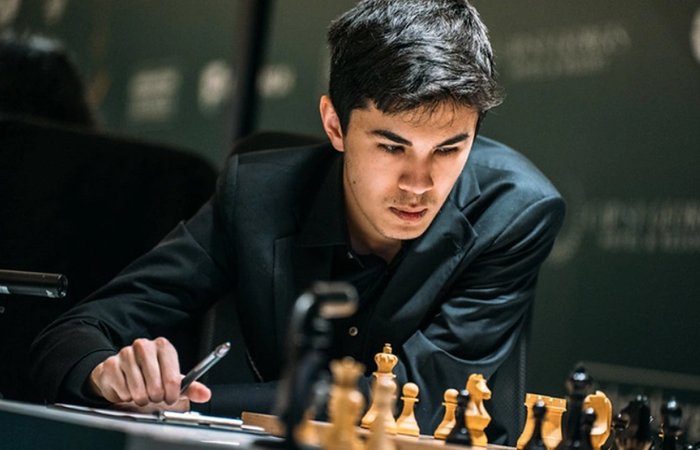
Basic logic also plays an important role. Not in a mathematical sense, but in a practical one: understanding cause and effect. If a piece leaves an important square, the position weakens. If a line opens, it can lead to an attack. These are not formulas, but common sense developed through practice.
Spatial thinking is just as important. The chessboard is not simply a set of squares, but a system of relationships. Pieces control lines, interact with each other, and create pressure on specific areas. The ability to see the position as a whole often matters more than trying to calculate everything.
In the end, strong play is built not on mathematical calculations, but on a combination of experience, logic, and intuition. That is why people with very different ways of thinking can succeed in chess.
Mathematics and chess do intersect, but they do not depend on each other. You do not need to be good at math to play chess. What matters much more is the ability to think, to notice your mistakes, and to learn from them. Everything else comes with experience.