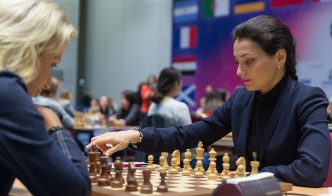

In every professional sport, there are competitions that are considered the main goal of a career. For some, it is an Olympic gold medal, for others – a Grand Slam victory or a championship title in motorsport. Such achievements are considered a symbol of sporting success and remain in history forever. Chess is no exception: the most prestigious chess tournaments bring together the world’s strongest players every year, and winning them is considered one of the major achievements in a grandmaster’s career. We have compiled a list of international chess tournaments that have the greatest authority among players, experts, and fans of the game.
Prestigious chess tournaments
Despite the centuries-old history of chess, international tournaments are a relatively recent phenomenon. In the 19th century, the strongest players more often met in individual matches, while competitions involving chess players from different countries were rare. The situation began to change in 1851, when the first major international chess tournament was held in London. Its success showed that this format attracted enormous interest from both players and spectators.
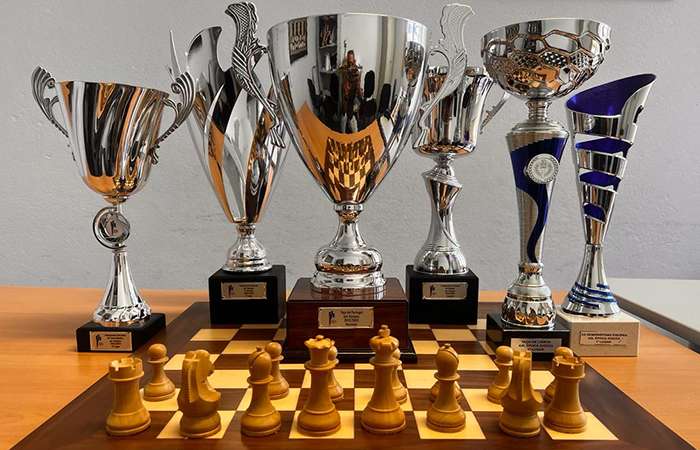
In the following decades, tournaments featuring representatives of different chess schools became an important part of professional chess life. Unlike other sports, where one major championship serves as the main benchmark, the system of competitions in chess is more diverse. Alongside the match for the world championship title, there are a number of international tournaments that are of great importance to professional players. We have included the most prestigious chess tournaments in our list.
Like many other major sporting events, international chess tournaments are held in different countries and cities. Most championships and major competitions do not have a permanent venue: the location is selected by the organizers based on the capabilities of the host side, infrastructure readiness, and applications from national federations. As a result, the geography of major chess competitions is constantly changing, and hosting them becomes a significant international event for the city.
World Chess Championship
The World Chess Championship is the main competition in the world of chess. The first official match for the world championship title took place in 1886 between Wilhelm Steinitz and Johannes Zukertort (Steinitz won). Since 1948, the championships have been organized by FIDE, and the world championship title has been won by legendary players including Garry Kasparov, Anatoly Karpov, Viswanathan Anand, and Magnus Carlsen.
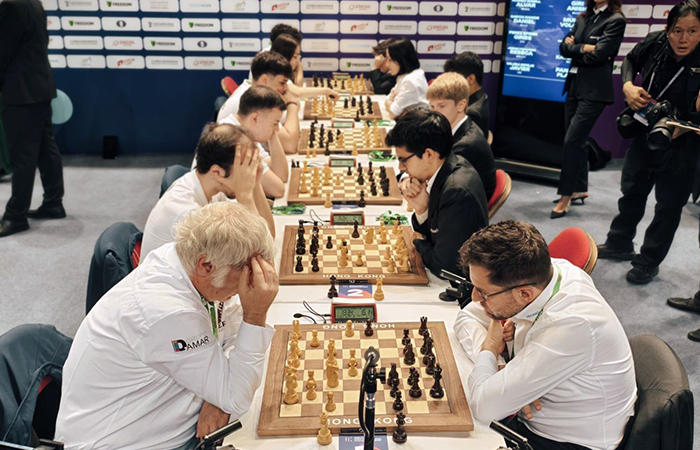
The championship match consists of 14 games with classical time control, in which the reigning world champion faces the winner of the Candidates Tournament to determine the new holder of the main title in chess.
Main facts about the tournament:
- Held since: 1886 (under FIDE in its modern format – since 1948)
- Frequency: usually every 2 years (the frequency has changed over the years)
- Prize fund: from $2,000,000 (in modern matches)
- Format: a 14-game match with classical time control
- Recent title holders: Gukesh Dommaraju, Ding Liren, Magnus Carlsen
Candidates Tournament
The Candidates Tournament is an important competition in the modern chess world because its winner earns the right to play a match for the world championship title. The first such tournament was held in 1950, and since 2013, the competition has been held in a format featuring eight of the strongest players, who face each other in a round-robin system, with two games against each opponent.
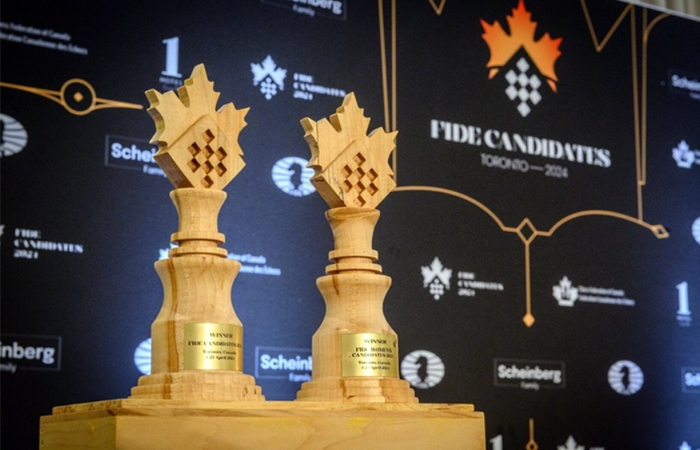
Being among the participants of the Candidates Tournament is considered a huge achievement: chess players go through a complex qualification system involving the World Cup, rating indicators, and other qualifying competitions. Over the years, the winners have included chess legends such as Boris Spassky, Anatoly Karpov, Garry Kasparov, and Viswanathan Anand. Today, this tournament is considered one of the most intense competitions on the chess calendar. In 2024, chess prodigy Gukesh’s victory was historic: he won the Candidates Tournament at the age of 17, becoming the youngest winner of the competition.
Main facts about the tournament:
- Held since: 1950
- Frequency: every 2 years
- Prize fund: €500,000 (2024)
- Format: 8 participants, with classical time control
- Recent title holders: Ian Nepomniachtchi, Gukesh Dommaraju
FIDE World Cup
The FIDE World Cup is one of the largest international competitions in the modern chess calendar and is held in a knockout format. Each round is a separate elimination match: a mistake in one game can cost a player their place in the competition. It was first held in 2000 and quickly became one of the main qualification routes to the Candidates Tournament.
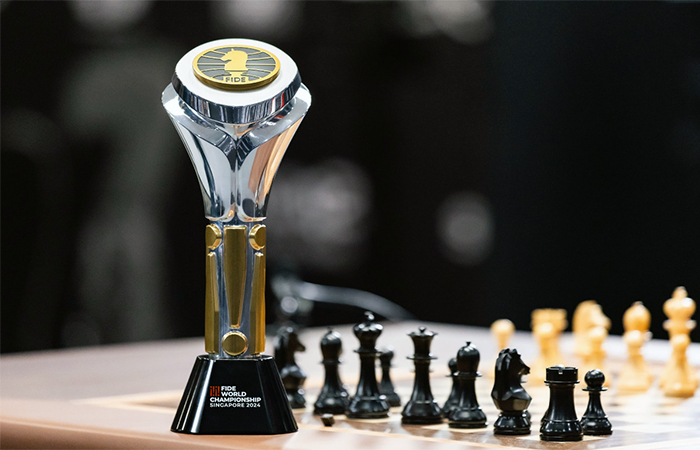
Hundreds of chess players take part in the tournament, including the world’s leading grandmasters, and the winners receive not only a prestigious title but also important qualification advantages. The competition’s special status is enhanced by the unpredictability of its format: even the favorites have to go through a series of tense matches where not only skill but also psychological resilience plays a decisive role. The ability to remain calm in difficult positions, analyze possible variations, and make decisions under pressure are skills that chess develops.
Main facts about the tournament:
- Held since: 2000, regularly since 2005 (in knockout format)
- Frequency: every 2 years
- Prize fund: $2,500,000+
- Format: classical, knockout system (2-game matches + tiebreak)
- Winners: Teimour Radjabov, Jan-Krzysztof Duda, Magnus Carlsen
Chess Olympiad
The Chess Olympiad is one of the few tournaments where world champions and the strongest grandmasters can play on the same board, but the final result depends on the contribution of the entire team. For example, even the absolute leader of a national team cannot win a match alone; the result of every member of the team is important. This clearly highlights the difference between the Olympiad and the other tournaments in the article.
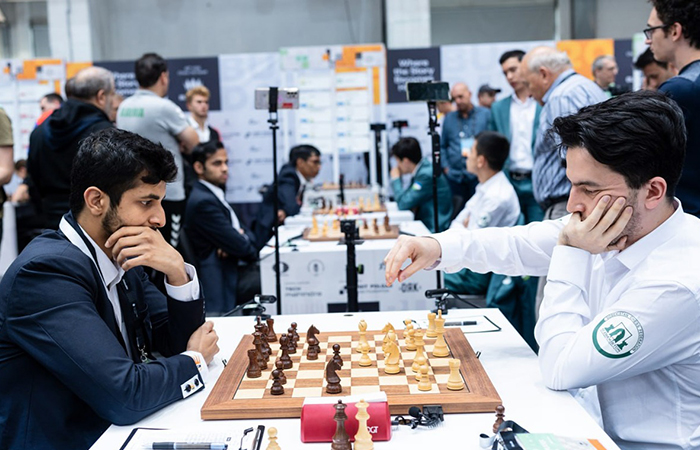
The first official Olympiad was held in London in 1927, and since then the tournament has become one of the main traditions of the international chess movement. For decades, the Chess Olympiad has been a stage for competition between the leading chess powers. At different times, the teams of the USSR, Russia, Ukraine, China, the USA, and India dominated, with each contributing to the development of the global chess school.
Main facts about the tournament:
- Held since: 1927
- Frequency: every 2 years
- Prize fund: none (medals and cups)
- Format: classical, team tournament (Swiss system)
- Winners: USSR, Russia, Ukraine, China, USA, India
Tata Steel Chess (Wijk aan Zee)
Every year, the Dutch town of Wijk aan Zee hosts the oldest chess tournament – Tata Steel Chess. The competition was first held in 1938 under the name Hoogovens Tournament and later became known as one of the main super-tournaments on the global chess calendar. The Wijk aan Zee tournament is often called the “Wimbledon of chess.” The strongest grandmasters in the world traditionally compete in the main Masters group, while the round-robin format allows each participant to play against every opponent.
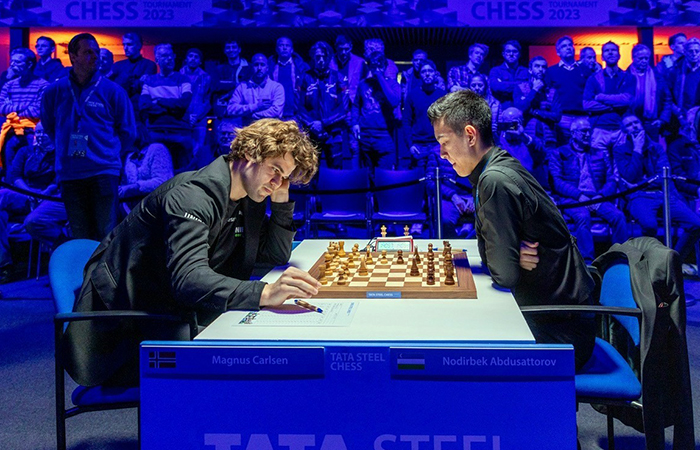
Interesting fact: Magnus Carlsen is the record holder at Tata Steel Chess. The Norwegian grandmaster has won the tournament eight times: in 2008, 2010, 2013-2016, 2019, and 2022, confirming his status as one of the most dominant players in the history of the competition.
Main facts about the tournament:
- Held since: 1938
- Frequency: annually
- Prize fund: €75,000 (Masters group)
- Format: classical, round-robin tournament
- Recent winners: Magnus Carlsen, Viswanathan Anand, Fabiano Caruana, Levon Aronian
World Rapid and Blitz Chess Championship (FIDE World Rapid & Blitz)
The FIDE World Rapid and Blitz Chess Championship is a prestigious chess tournament in the rapid and blitz formats. One of the main eligibility criteria is having a chess rating above 2550 Elo. The competition has been held in a combined format since 2012 and brings together the world’s strongest grandmasters, who compete in two categories: rapid chess and blitz (games with minimal time control). Unlike classical chess, players here have to make decisions within seconds, combining deep calculation with a quick assessment of the position.
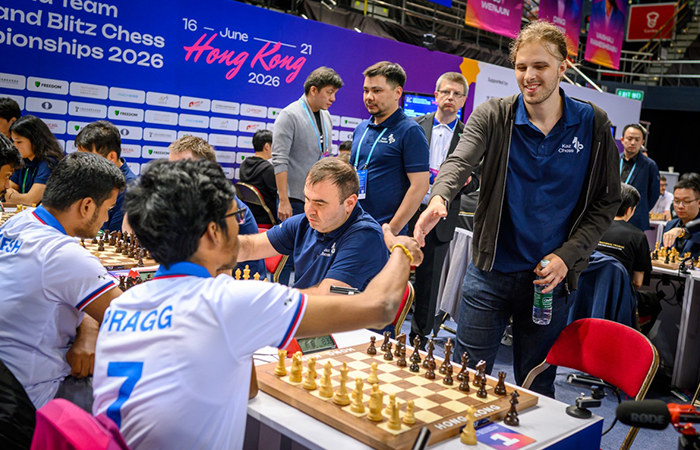
These disciplines require chess players to have a special set of qualities: instant concentration, developed intuition, and the ability to maintain accuracy under high pressure. This is why the championship often features players who are particularly strong in unconventional situations and dynamic battles. In recent years, rapid and blitz have become not just additional formats, but a full-fledged part of professional chess.
Main facts about the tournament:
- Held since: 2012 (combined format)
- Frequency: annually
- Prize fund: $1,000,000
- Format: rapid (Swiss system), blitz (Swiss system)
- Winners: Magnus Carlsen, Hikaru Nakamura, Daniil Dubov
Grand Chess Tour
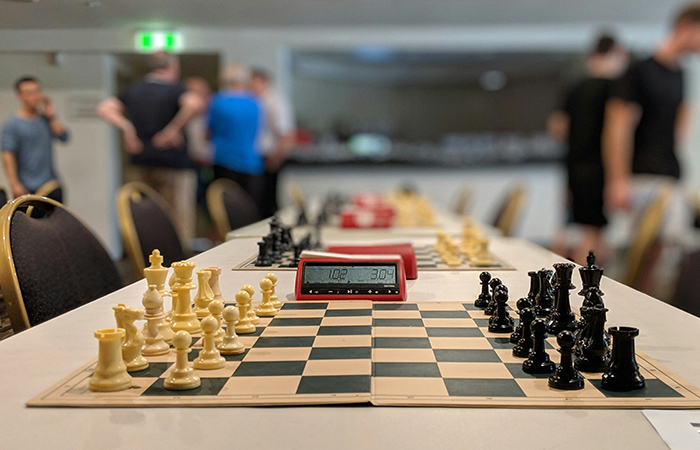
The Grand Chess Tour holds a special place among prestigious chess competitions because it is not a single tournament, but a full series of international competitions. It was founded in 2015 with the aim of bringing together the major chess events featuring the world’s strongest players.
The Grand Chess Tour format changes from year to year: the organizers may add new venues, change the number of stages, and experiment with combinations of classical chess, rapid, and blitz. Throughout the history of the series, it has included such well-known competitions as Norway Chess, London Chess Classic, and Paris Rapid & Blitz, although the lineup of stages is regularly updated depending on partners, organizers, and the global chess calendar.
The main feature of the series is its points system. Participants earn points at individual stages, and the best players of the season qualify to compete in the final tournament. Thanks to this format, the Grand Chess Tour has become one of the major commercial projects in the modern chess world, allowing fans to follow the rivalry between leading grandmasters throughout the year.
For beginners learning to play chess, each of these championships can become a motivation for development and a practical example of a high level of skill. Analyzing the games of leading grandmasters makes it possible to study different strategies, understand the principles of positional play, and gradually improve one’s own skills. And perhaps in the future, become a participant in one of the most prestigious chess tournaments.